
Why You Should Hire an Equine Photographer
Often, the first thing I hear when people inquire about a photoshoot is: "Morgan, we had a photographer take our family photos, and the ones with the horses didn't turn out right. We need you to fix them!"
Most of the time, family photographers are not familiar with photographing horses or the technicalities that come with it. Family photographers will make you look great. The horse… not always so much. As an equestrian, photos like this will live on my phone forever; they will never be printed or shared on social media. I am guilty of overanalyzing how my horse and I look before posting anything to Instagram or Facebook. Even before I became a photographer, I was hyper aware of how my horse looked. Having to comb through family photos to see which ones with your horse you can post online is exhausting.
You should be excited to share the images of you and your horse. Plus, after paying money to hire a professional, you should be assured that they have the know-how to photograph horses well. With an equine photographer, you can ensure that both you and your horse will look your best!
So why are horses difficult to photograph? Usually, this can be attributed to one of three things. Expression, posture, and proportion.
Expression
There are so many nuances of a horse to pay attention to. As equestrians, we can identify when something is off with one of those. Non-equine photographers often overlook what equestrians deem “obvious.” There are even Vogue covers, shot by some of the best photographers in the world, that are wonky-looking. I'm sure we've all seen pictures of celebrities with horses used as props in ads that have made us go, "What is happening here?" My goal is to negate this feeling. If the horse doesn’t have its ears forward in a photo, there is a reason behind it. Often, I am capturing a moment between that horse and their person where the horse is listening to them. Or, the rider may be loving on the horse, and they have nice, relaxed ears. To know how to set up these shots and what you may have to fix in post-processing, you have to know equine body language.
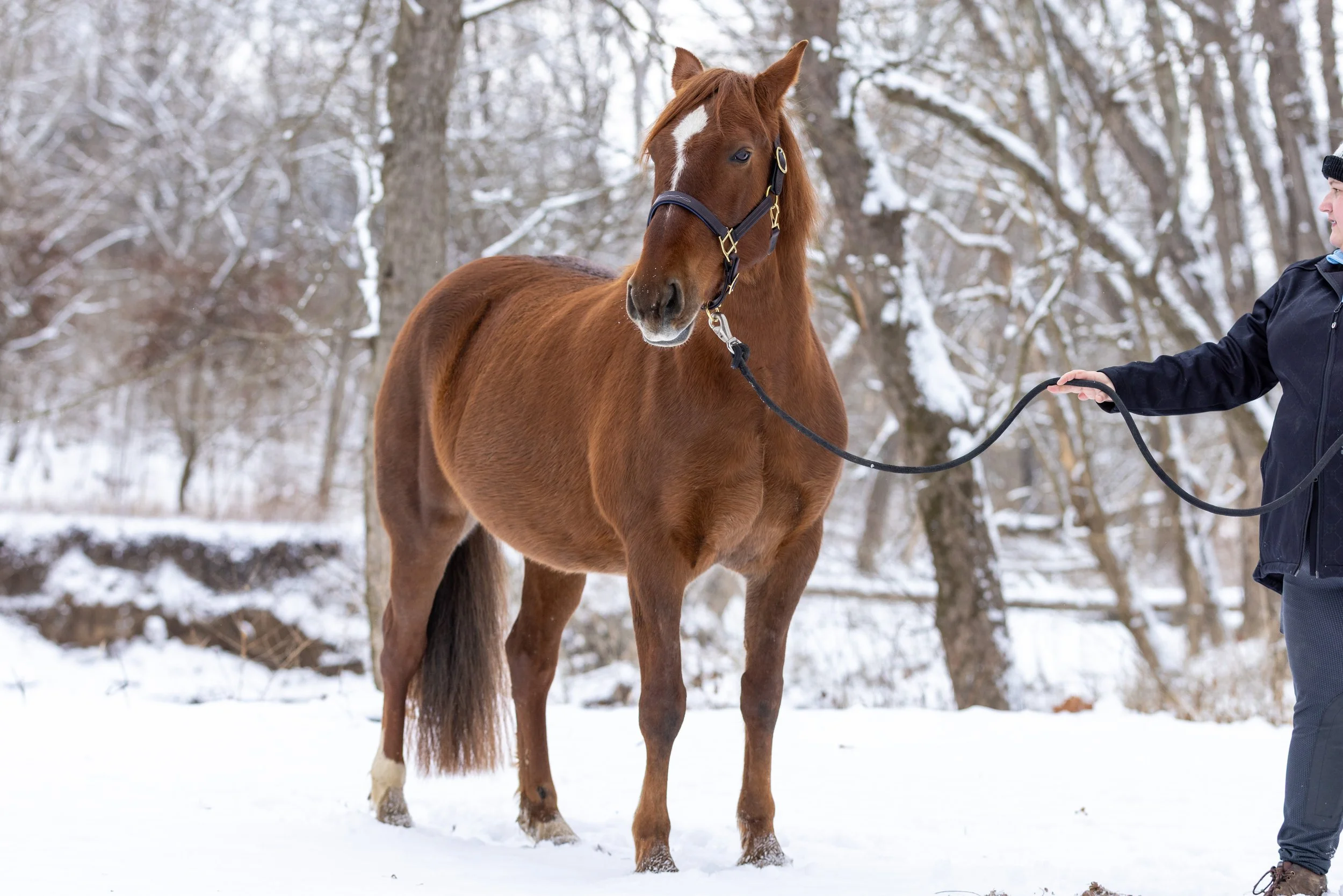
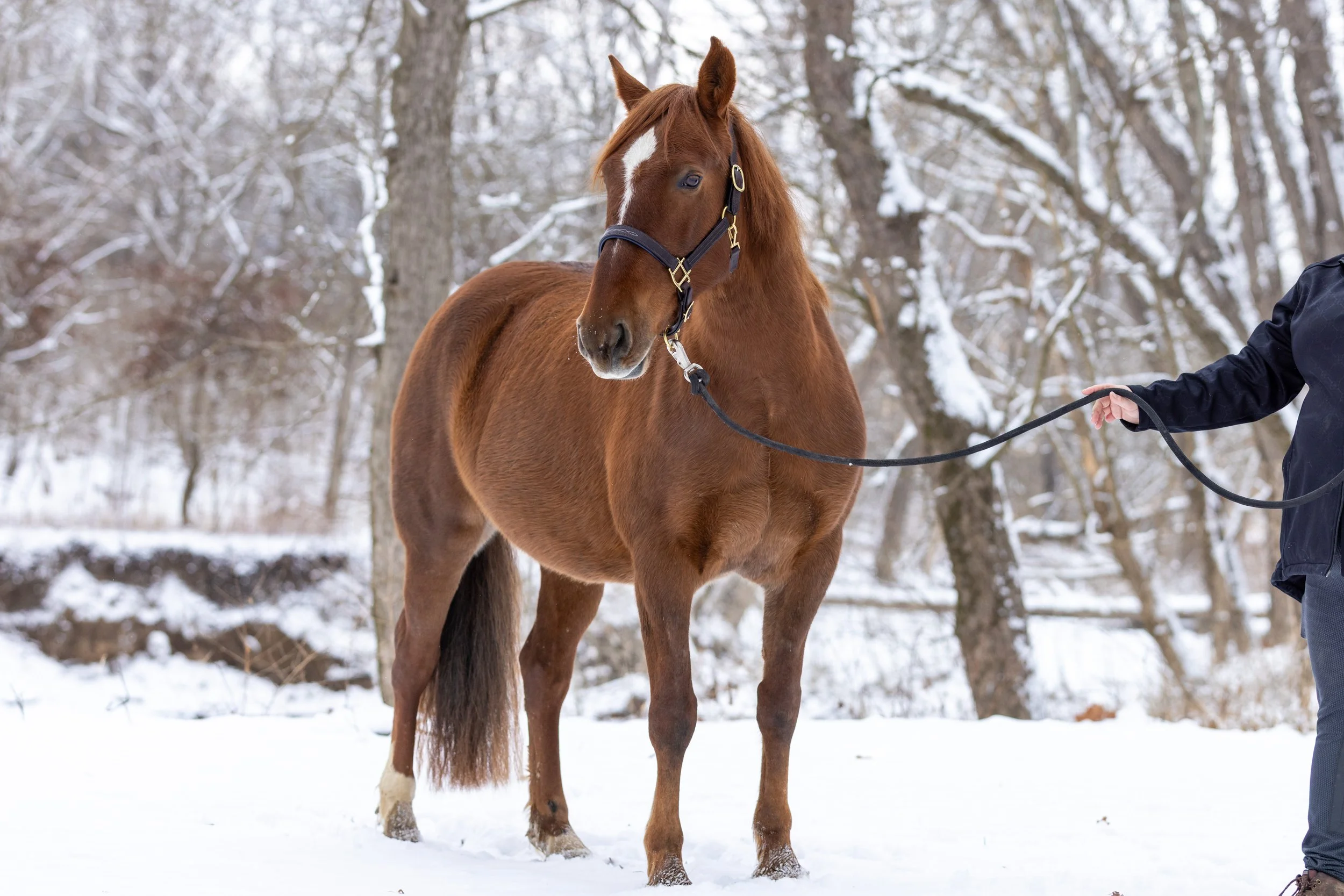
Expression can be as simple as getting the ears forward. Between these two images, the only thing that we changed was getting his ears forward. This is a great example of a photo that I would have done an ear swap on if I had not gotten one with his ears forward.
Posture
A horse’s posture is a big one that non-equine photographers overlook. As equestrians, it’s easy for us to tell when our horse looks slightly off, even if we cannot pinpoint why.
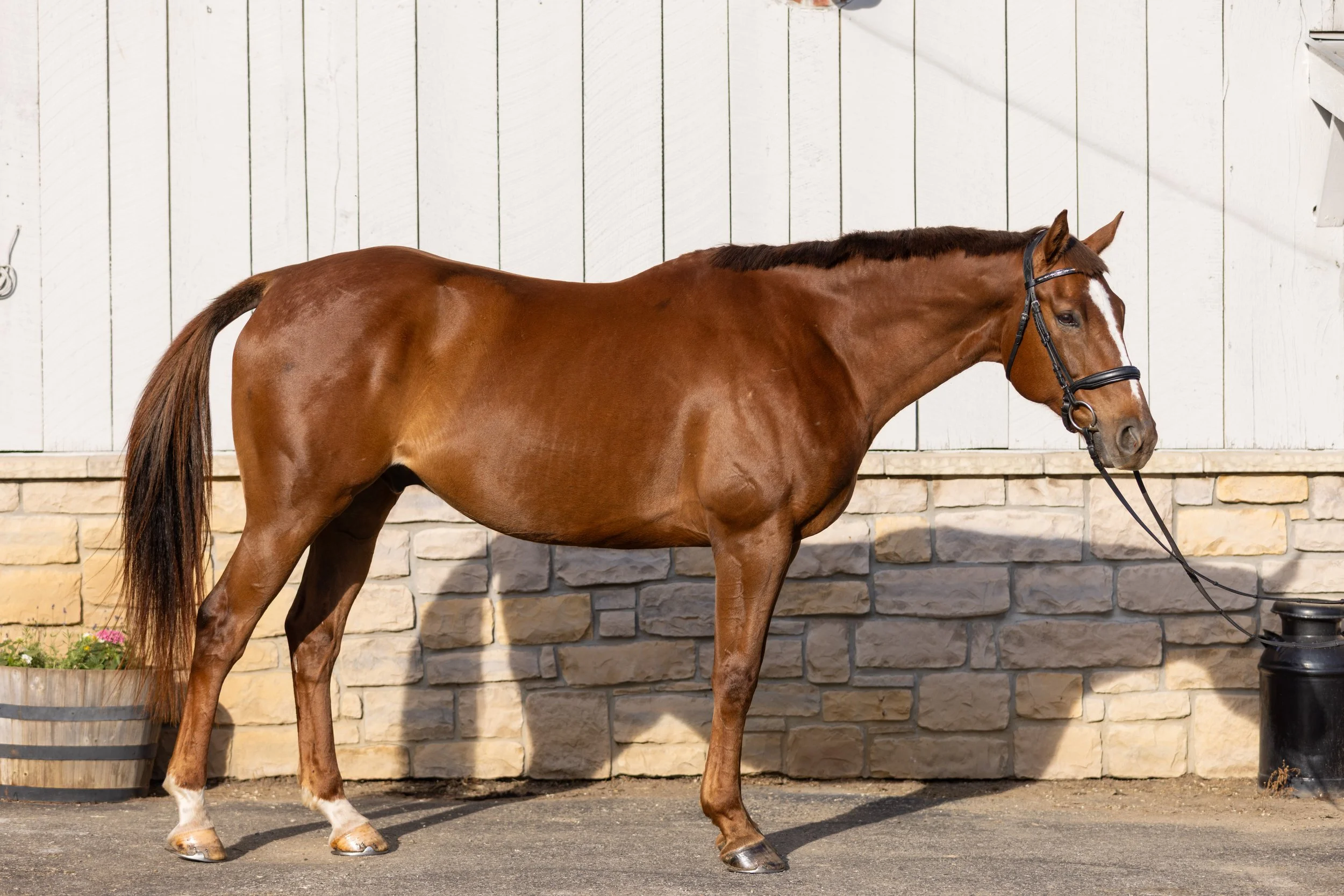
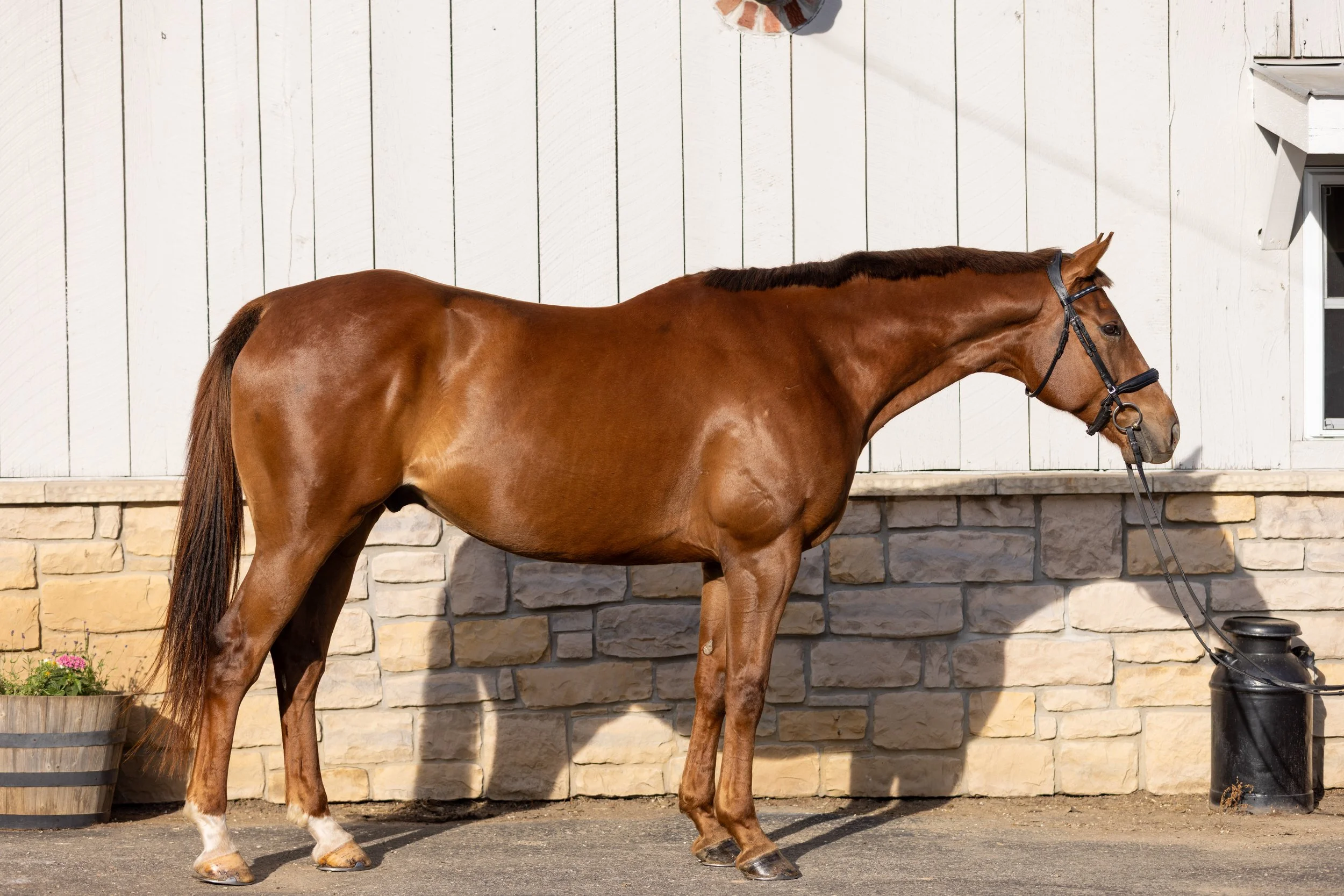
Between these two images, what was fixed was readjusting the front legs to be able to see both of them and bringing the hind legs closer together to better distribute the weight between all four legs. If you look at the first photo, the horse’s weight is on the forehand, and the right hind is not fully on the ground. On the second, the horse’s weight has been evenly distributed between all four legs, making him look more balanced.
Proportion and Lens Compression
Have you ever looked at a photographer’s work and wondered why the horse looked disproportionate (usually a huge head and small body)? This is seen most prevalently in black backgrounds. Often, family photographers use lenses ranging from 24mm to 70mm. Lenses under 50mm are wide-angle lenses; though, it’s important to note that distortion can happen with horses if the focal length is under 85mm. To put it simply, when a wide-angle lens is used, it distorts the horse’s body because of perception exaggeration.
Please excuse how dirty Z is, we had 10 minutes to shoot these. Thanks to Red Pony Photography for taking these shots for me!
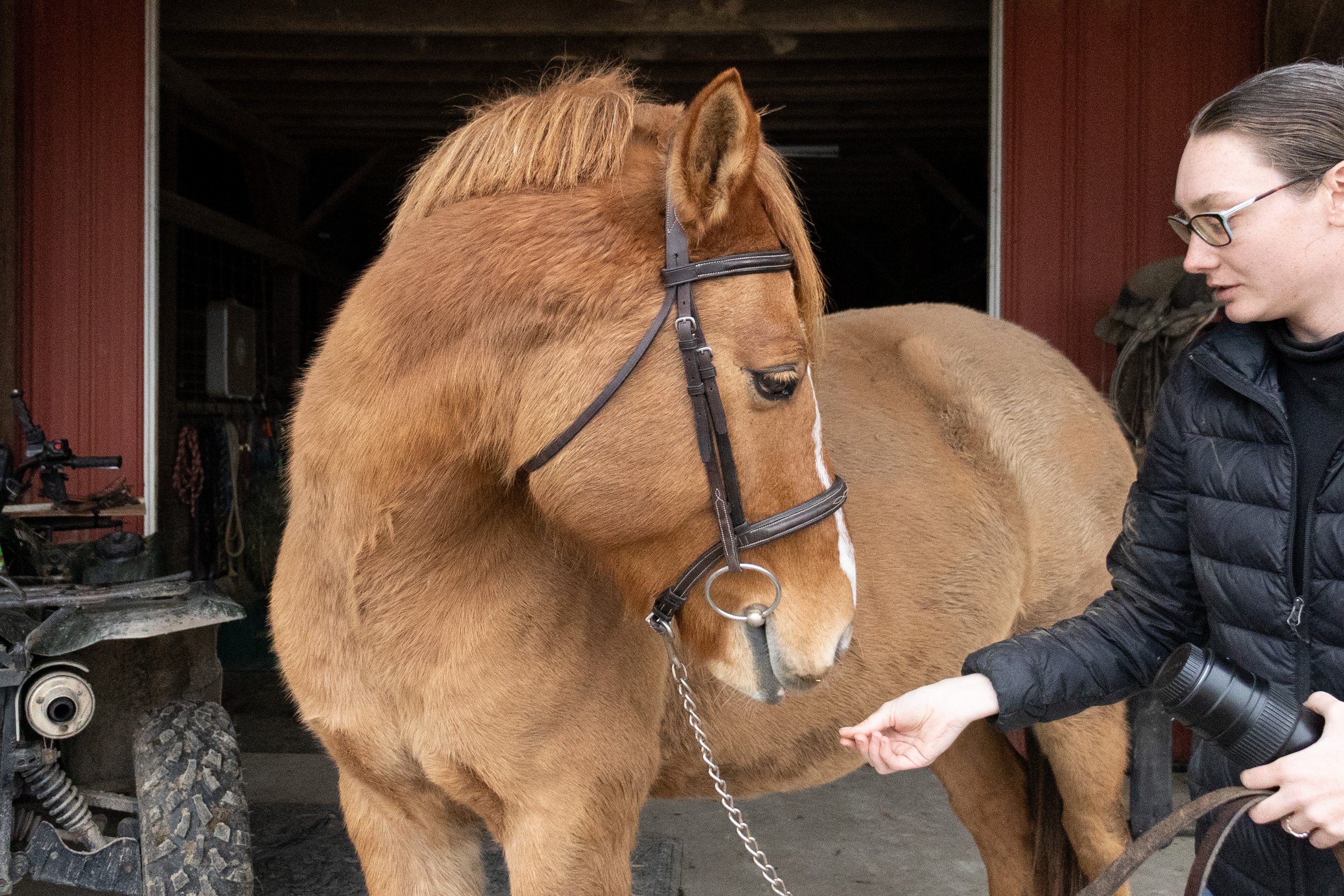
18mm shot with an 18-55mm wide angle lens.
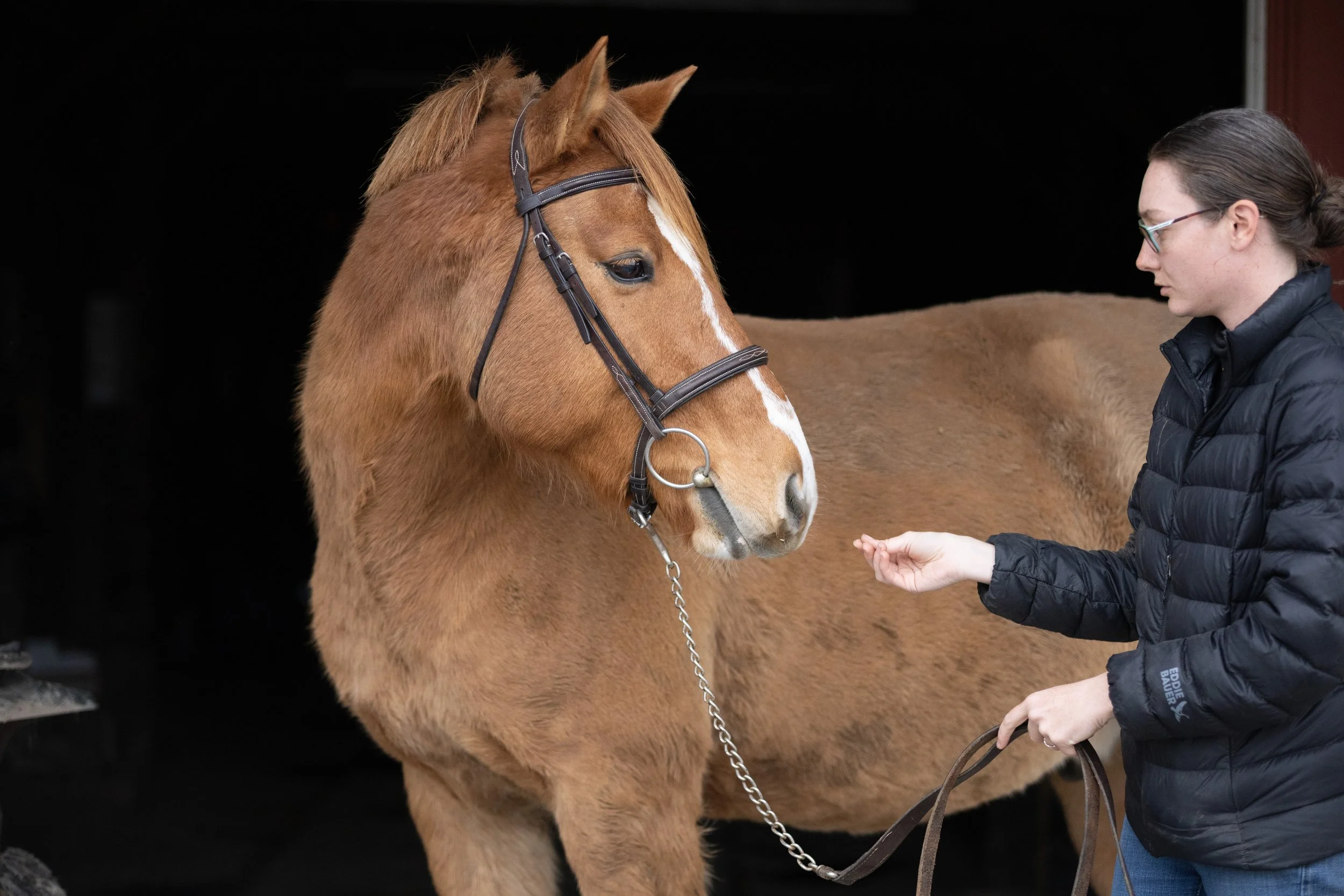
98mm shot with a 70-200mm telephoto lens.
Framing
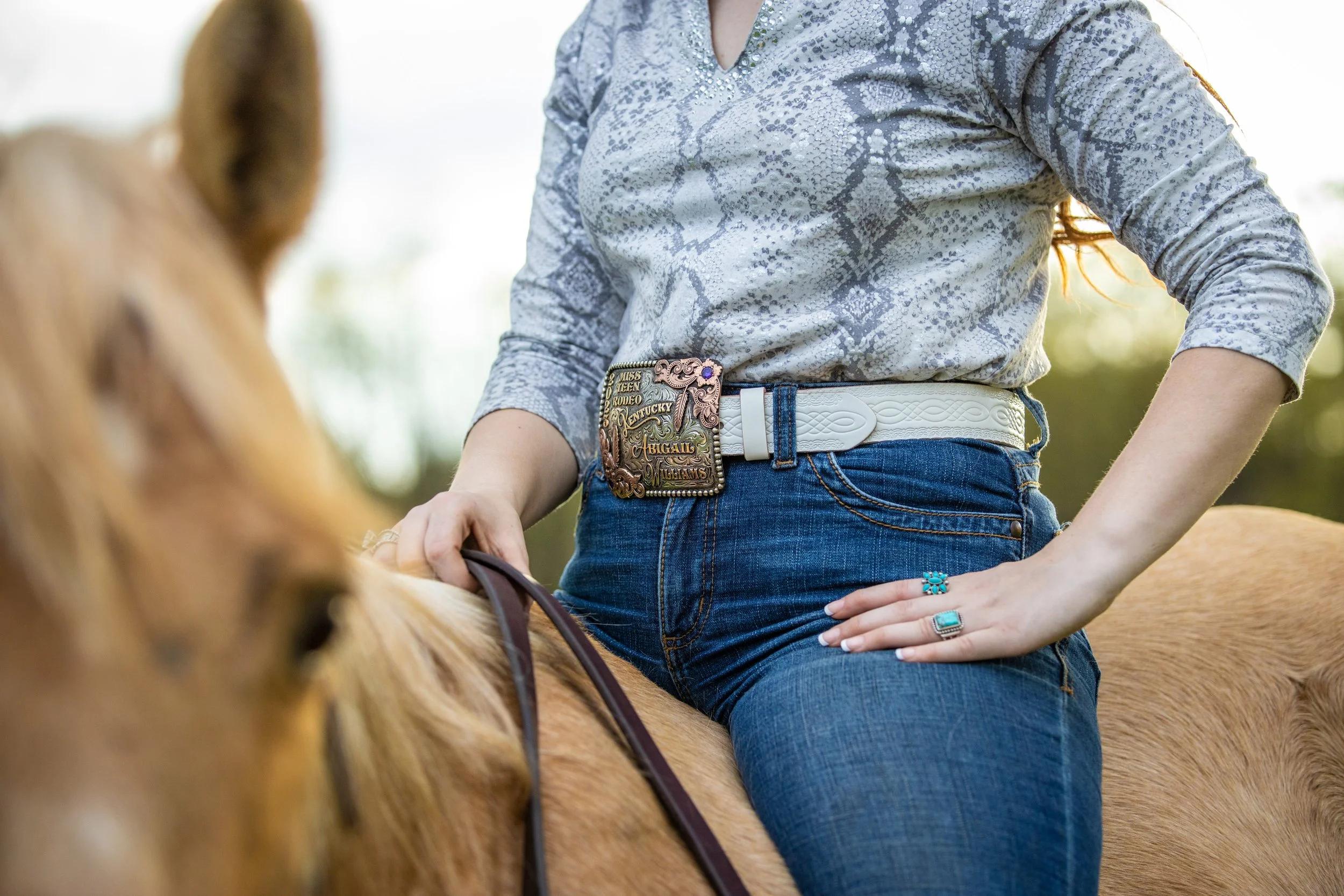
Recently, I saw an example of a lifestyle photographer who had gorgeous photos of the family, but only their horse’s butt was visible in many of the images. I don’t know about you, but my horse comes before my husband. If anyone is cropped out of the image, it is not going to be my horse. Creative cropping can be done in a way that the horse is still highlighted in the image.
Safety
Most importantly, other equestrians will know what to look out for to keep everyone safe. Photoshoots can be stressful for both horse and human. Horses are not used to standing around posing for an hour. This can make even the most bombproof horse be antsy. In these scenarios, it is important to know when to give the horse a break. Pushing an already anxious horse can lead to a dangerous situation. It is critical to be able to read equine body language to keep everyone safe.
On the other side of this, we as riders can get frustrated when our horse doesn’t do exactly what we want. If this happens, it is beneficial to have a support system that is familiar with these situations. On this note, as photographers, we need to be able to get the shot fast. Sometimes we have a split second to take ‘the photo,’ rest assured, we’ve done this many times. If your horse is a little anxious, don’t worry! Trust me, we have seen it all before.
Wrap-up
Working with an experienced equine photographer can make a huge difference in capturing the connection and personalities of both you and your horse. Understanding equine expression, posture, and proportion ensures that your bond is showcased in every image. Prioritizing safety and comfort during the photoshoot not only creates a more enjoyable experience for both horse and human but also leads to stunning photographs that you'll be excited to share. If you want to commemorate special moments with your horse, choosing someone who understands the art of equine photography will give you peace of mind that your photos will turn out with both you and your horse looking your best!